After PRP therapy for hair, expect mild scalp redness, tenderness or tightness for a day or two, and follow your clinic’s aftercare such as avoiding washing and strenuous exercise for a short period. Results take several months and evidence for benefit is modest and varies between protocols.
Platelet-rich plasma (PRP) therapy uses a concentrate of your own blood platelets injected into the scalp, with the idea that growth factors will support hair follicles. It is popular as an add-on for pattern hair loss. This guide explains PRP therapy recovery and aftercare, what is normal, what to avoid and what the research suggests about results.
What PRP involves
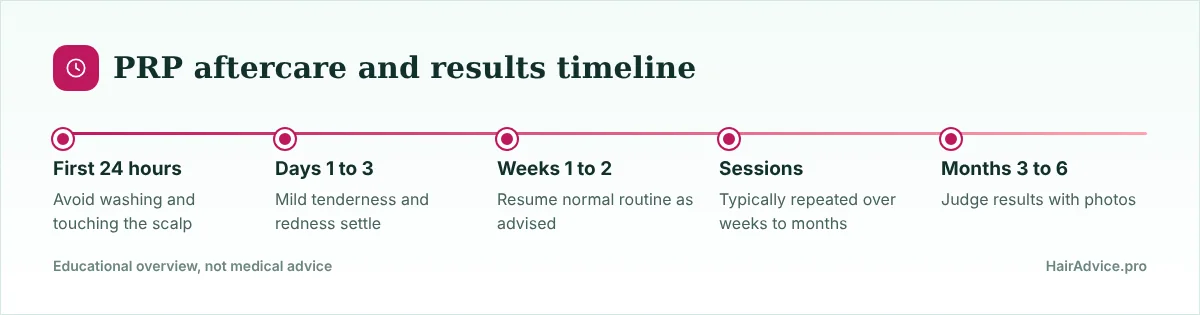
A small sample of blood is taken and spun in a centrifuge to concentrate platelets. The resulting plasma is injected into areas of thinning, often with multiple small injections or with microneedling. The session usually lasts about an hour, and local anaesthetic or numbing cream may be used. Courses commonly involve several sessions spaced weeks apart, followed by maintenance, but protocols vary widely.
What the evidence shows
A systematic review and meta-analysis of randomised trials in androgenetic alopecia reported that PRP improved hair density and count compared with controls, with generally mild side effects. However, studies differ in how PRP is prepared, the number of sessions, platelet concentration and measuring methods, and many are small. Reviewers therefore call the results encouraging but not standardised. PRP is generally considered an adjunct, not a replacement for proven medicines such as minoxidil and finasteride. Costs can be high, and benefits probably fade without maintenance.
Recovery: what is normal
- Tenderness, tightness or mild pain in the treated area, usually for a day or two.
- Redness and slight swelling, sometimes with small bumps at injection sites.
- Mild headache or a feeling of pressure.
- Small amounts of bleeding or pinpoint scabs that settle within a few days.
- Possible temporary shedding in some people, as hair cycles adjust.
Most people return to normal activity the same or next day. Because PRP uses your own blood, allergic reactions are uncommon, but infection, bruising and rarely vascular problems are possible. Follow the aftercare sheet from your clinic, since protocols differ.
Aftercare: typical do’s and don’ts
- Avoid washing your hair for the period your clinic advises, often 12 to 24 hours, and then use a gentle shampoo.
- Do not touch, rub or scratch the scalp.
- Avoid strenuous exercise, sauna and swimming for 24 to 48 hours, or as advised.
- Skip hair dye, chemical treatments and heavy products for a few days.
- Avoid anti-inflammatory painkillers such as ibuprofen and aspirin around treatment if your clinician says so, since they may affect platelet function. Ask what you can take for pain.
- Protect the scalp from sun and wear a loose hat if needed.
- Avoid alcohol and smoking for a short period if advised, since they can affect healing.
- Keep taking your regular hair medicines unless told otherwise.
Timeline for results
Hair cycles are slow, so do not expect a change after one session. Trials typically measure results after three to six months or more. Take monthly photos under the same lighting, and use the treatment timeline planner to set expectations. If you see no improvement after a full course, discuss stopping rather than continuing indefinitely.
Who should avoid PRP
PRP is generally not recommended for people with blood disorders, those on anticoagulants without medical advice, people with active scalp infection or inflammation, some cancers, or those who are pregnant or breastfeeding. It is not suitable for scarring alopecia. Get a diagnosis first. Compare PRP with other options such as microneedling, laser therapy and newer approaches like exosome therapy, and work out the likely cost with our cost comparison calculator.
Choosing a clinic
Ask who performs the procedure and their qualifications, how PRP is prepared, how many sessions are recommended and why, the total price, and what happens if you see no benefit. Avoid clinics that guarantee results or pressure you into large prepaid packages.
Is PRP therapy right for you?
PRP therapy suits people with early to moderate pattern hair loss who understand that results are modest and who are willing to pay for several sessions and maintenance. It is a poor fit if you want a quick change, if your hair loss is scarring or sudden, or if you have not tried proven medicines. Ask yourself what you would do if there is no benefit after a course, and write it down before you start. Good PRP therapy providers will discuss this openly, give you written aftercare and let you take your time.
When to see a doctor
- You have spreading redness, warmth, pus or fever after treatment.
- Severe or worsening pain, swelling or headache.
- You take anticoagulants or have a blood disorder.
- Your scalp is inflamed, infected or scarring.
- You have no improvement after a full course and are being pushed to buy more sessions.
Frequently asked questions
How long does PRP recovery take?
Most people have mild tenderness and redness for a day or two and return to normal activity quickly. Follow your clinic’s aftercare.
When can I wash my hair after PRP?
Often after 12 to 24 hours, using a gentle shampoo, but protocols differ. Follow your clinic’s instructions.
Does PRP regrow hair?
Trials suggest it can improve hair density in pattern hair loss, but results vary and protocols are not standardised.
How many PRP sessions do I need?
It varies, commonly several sessions over a few months followed by maintenance. Ask your clinic for the rationale and cost.
Is PRP better than minoxidil?
Not proven. Minoxidil and finasteride have more evidence. PRP is usually considered an add-on.
Key takeaways
- PRP injects concentrated platelets from your blood into the scalp.
- Evidence suggests modest benefit in pattern hair loss, with variable protocols.
- Expect mild tenderness for 1 to 2 days and follow your clinic’s aftercare.
- Judge results after 3 to 6 months with photos.
- It is an add-on, not a replacement for proven medicines.
Sources and further reading
- Platelet-rich plasma for alopecia: systematic review and meta-analysis (2023)
- StatPearls: Androgenetic alopecia
- Effectiveness of combination therapies for androgenetic alopecia: meta-analysis
- Mayo Clinic: Hair loss, diagnosis and treatment
Want a personalised read on your situation? Try our free 2-minute hair loss quiz or ask the AI hair doctor.