Both an underactive (hypothyroid) and overactive (hyperthyroid) thyroid can cause diffuse hair thinning because thyroid hormones regulate the hair growth cycle. A blood test for TSH confirms thyroid disease, treatment usually restores hormone levels, and hair typically recovers over several months after levels are stable.
The thyroid is a small gland in the neck that sets the pace of your body’s metabolism, including how fast hair follicles cycle through growth and rest. When it does not work properly, hair is often one of the first places you notice. This guide covers the thyroid and hair loss connection: why it happens, which symptoms point to a thyroid problem and what to expect from treatment.
How the thyroid affects hair
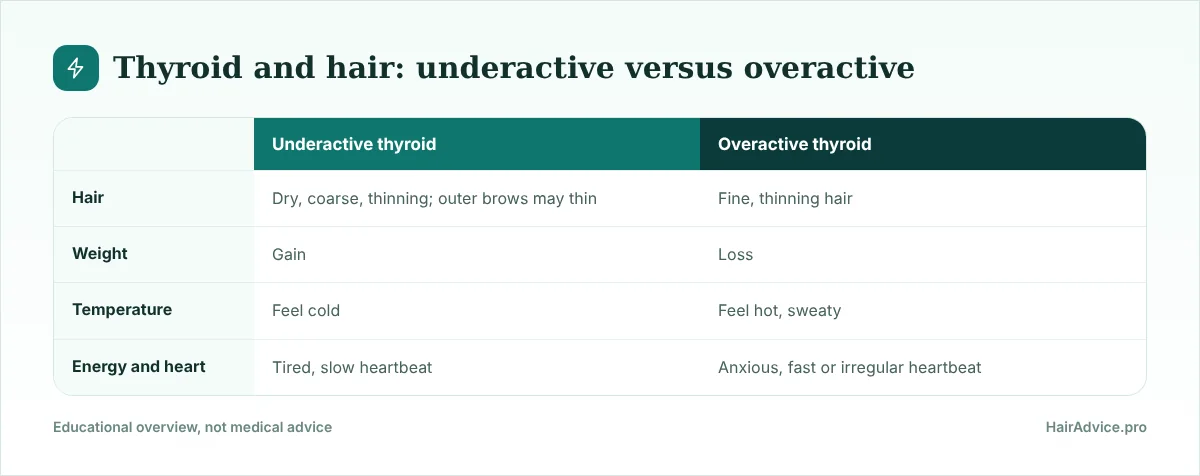
Thyroid hormones act on hair follicles and help regulate the hair cycle. When hormone levels are too low (hypothyroidism) or too high (hyperthyroidism), more hairs shift into the resting phase and shed, causing diffuse thinning across the scalp. MedlinePlus lists hair loss among the symptoms of an underactive thyroid, together with fatigue, weight gain, feeling cold and dry skin. The NHS also notes hair changes in thyroid disease. In hypothyroidism, hair can also become dry, coarse and brittle, and outer eyebrows may thin.
Symptoms that suggest a thyroid problem
Underactive thyroid
- Tiredness, sluggishness and low mood.
- Weight gain and constipation.
- Feeling cold, dry skin and a hoarse voice.
- Heavy or irregular periods.
- Dry, brittle hair and diffuse thinning.
Overactive thyroid
- Weight loss despite a normal or good appetite.
- Fast or irregular heartbeat, anxiety and tremor.
- Heat intolerance and sweating.
- Light periods, trouble sleeping and diarrhoea.
- Fine, thinning hair.
Thyroid problems are more common in women and become more frequent with age. They can appear after pregnancy, and autoimmune thyroid disease often occurs alongside other autoimmune conditions such as alopecia areata. See our guides on autoimmune hair loss and postpartum hair loss.
Testing
A simple blood test measuring thyroid stimulating hormone (TSH), and often thyroid hormones such as free T4, can show whether your thyroid is working properly. A doctor interprets the results with your symptoms, and further tests, including antibodies, may be needed to find the cause. Because iron deficiency, vitamin D deficiency and other problems can also cause shedding, it is common to check several at once. Our guides on anaemia and vitamin D explain these tests.
Treatment and hair recovery
Treatment targets the thyroid itself. Underactive thyroid is usually treated with daily levothyroxine, and overactive thyroid with medicines, radioactive iodine or sometimes surgery, depending on the cause. When hormone levels are brought back to normal, hair shedding usually settles, and regrowth follows over several months. Hair grows about a centimetre a month, so a visible change takes time, and many people notice improvement within three to six months after levels stabilise, with fuller recovery by a year.
It is worth noting that some thyroid treatments themselves can cause temporary shedding when started or when the dose changes. This is usually mild and settles, but you should mention it to your doctor and not stop medicine on your own.
If hair loss persists after treatment
If thyroid levels are normal and hair keeps thinning, look for other causes. Pattern hair loss, iron deficiency, stress, medicines or other autoimmune disease may be involved, and thyroid disease can coexist with pattern hair loss. A dermatologist can examine the scalp and discuss options such as minoxidil. Our hair loss quiz and hair shedding checker can help you describe your pattern before an appointment.
Practical tips while you recover
- Take thyroid medicine exactly as prescribed, usually on an empty stomach, and separate it from iron and calcium supplements as your doctor advises.
- Eat a balanced diet with enough protein, and do not take high-dose supplements, such as biotin, without telling your doctor, as they can interfere with thyroid blood tests.
- Be gentle with hair, avoiding tight styles and excess heat.
- Photograph your parting and hairline monthly to track progress.
- Keep follow-up appointments so doses can be adjusted.
Thyroid and hair loss: when to ask for a test
You do not need a thyroid test for every bout of shedding, but it is worth asking if thyroid and hair loss may be linked in your case: you have other symptoms such as tiredness, weight change or temperature intolerance, you have had a baby recently, you have a family history of thyroid disease or an autoimmune condition, or your hair loss has been diffuse for more than three months. A test is quick, inexpensive and answers an important question. If the result is normal, you can move on to other causes without wondering about the thyroid again.
When to see a doctor
- You have fast or irregular heartbeat, chest pain or fainting.
- You have severe fatigue, weight change, feeling cold or hot, or a swelling in the neck.
- You have changes in your periods or fertility problems alongside hair loss.
- Hair loss began after pregnancy and you feel unwell or low in mood.
- Hair continues to thin despite normal thyroid tests.
Frequently asked questions
Can thyroid problems cause hair loss?
Yes. Both underactive and overactive thyroid can cause diffuse thinning because thyroid hormones regulate the hair cycle.
Will my hair grow back after thyroid treatment?
Usually yes. Once hormone levels are stable, shedding settles and hair regrows over several months, often reaching good recovery by a year.
How do I test for thyroid problems?
A blood test for TSH and thyroid hormones. Your doctor interprets the results with your symptoms.
Can thyroid medication cause hair loss?
Some people notice temporary shedding when starting treatment or changing dose. It is usually mild, and you should not stop medicine without advice.
Does thyroid hair loss look different from pattern baldness?
Thyroid hair loss is typically diffuse, over the whole scalp, with other symptoms. Pattern baldness is patterned, such as a widening parting or receding hairline.
Key takeaways
- Thyroid hormones regulate the hair cycle; both underactive and overactive thyroid can cause thinning.
- Symptoms include fatigue, weight change, temperature intolerance and heart rate changes.
- A TSH blood test diagnoses it; treatment normally restores hair over months.
- Thyroid disease can coexist with other causes, so keep looking if hair keeps thinning.
- Tell your doctor about biotin, which can distort thyroid tests.
Sources and further reading
- NHS: Underactive thyroid (hypothyroidism)
- MedlinePlus: Hypothyroidism
- American Academy of Dermatology: Hair loss, who gets it and causes
- StatPearls: Telogen effluvium
Want a personalised read on your situation? Try our free 2-minute hair loss quiz or ask the AI hair doctor.